Core Web Vitals optimization for service business websites
Core Web Vitals Optimization for Service Business Websites: Improving LCP, FID, and CLS for Better Rankings and Conversions
Excerpt:
In the competitive world of service-based businesses, website performance can make or break your online presence. This comprehensive guide dives into Core Web Vitals optimization for service business websites, offering practical steps to enhance LCP, FID, and CLS for improved SEO rankings and higher conversion rates.
Suggested URL: https://www.zavabuild.com/core-web-vitals-optimization-for-service-business-websites
Meta Tags:
<title>Core Web Vitals Optimization for Service Business Websites: Improving LCP, FID, and CLS for Better Rankings and Conversions</title> <meta name="description" content="Master Core Web Vitals optimization for service business websites to boost LCP, FID, and CLS. Enhance SEO rankings, user experience, and conversions with expert tips." /> (148 characters)
Introduction to Core Web Vitals Optimization for Service Business Websites
Core Web Vitals optimization for service business websites is no longer optional—it's essential for staying competitive in search engine results and driving conversions. As a service provider, whether you're in plumbing, consulting, or legal services, your website is often the first point of contact with potential clients. If it loads slowly, feels unresponsive, or shifts unexpectedly, visitors will bounce, costing you leads and revenue. Google's Core Web Vitals—comprising Largest Contentful Paint (LCP), First Input Delay (FID), and Cumulative Layout Shift (CLS)—measure these critical aspects of user experience. By optimizing them, you can improve rankings, reduce bounce rates, and boost conversions by up to 35%, as seen in real-world case studies from professional services firms.
In this guide, we'll explore why these metrics matter specifically for service businesses, how to measure them, and actionable strategies to improve each one. We'll also touch on the transition from FID to Interaction to Next Paint (INP) in recent years, ensuring your optimizations are future-proof as of 2026. For more on overall SEO strategies, check out our related post on SEO Best Practices for Service Businesses.
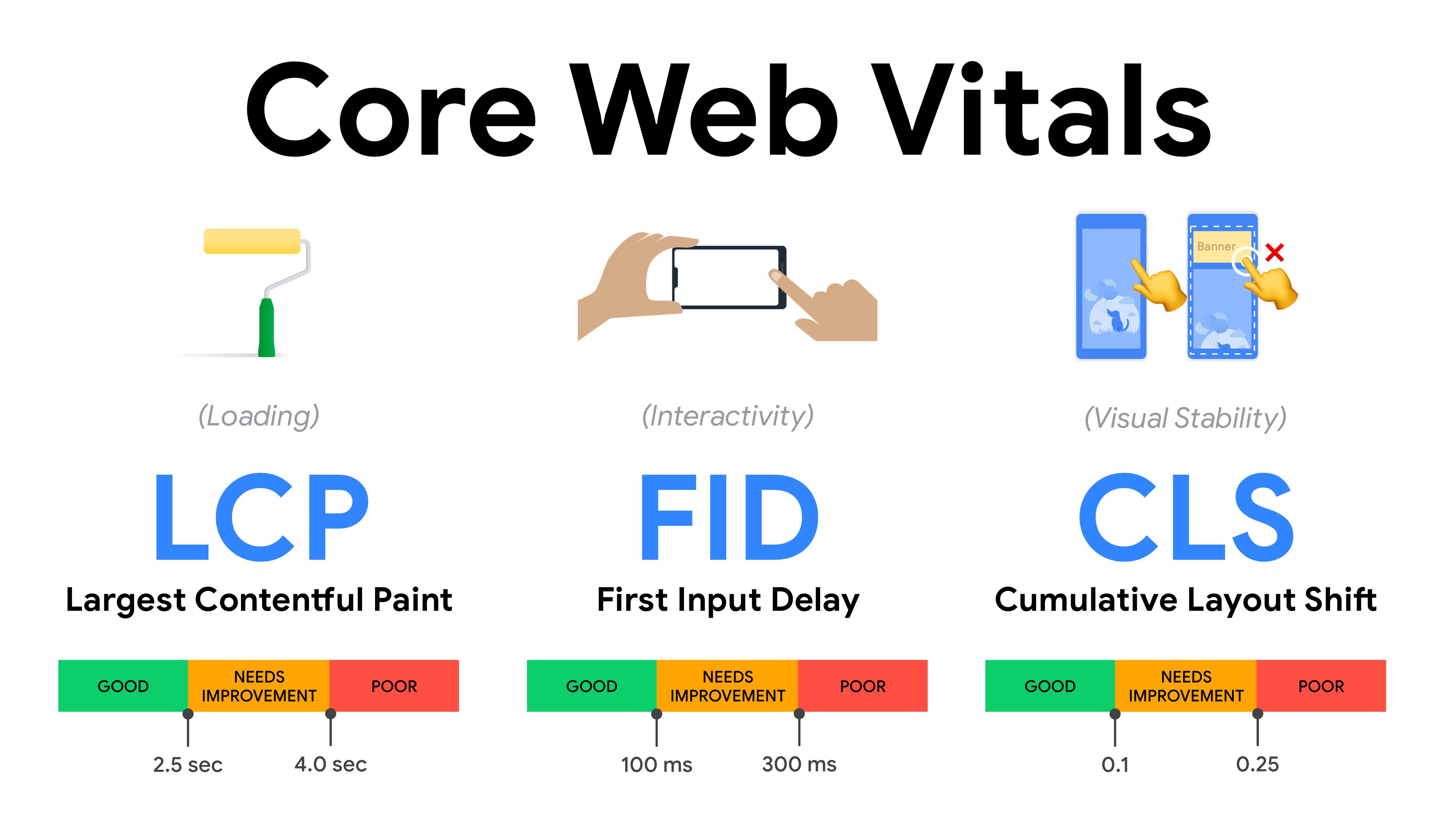
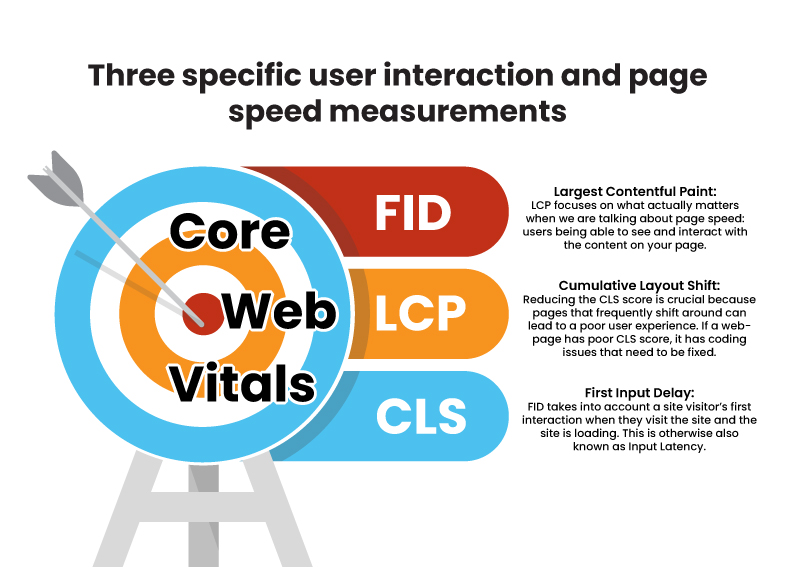
Core Web Vitals: Explained
Alt text: Core Web Vitals infographic illustrating LCP, FID, and CLS metrics with performance thresholds for service business website optimization
What Are Core Web Vitals and Why Do They Matter?
Core Web Vitals are a set of user-centric metrics introduced by Google to evaluate real-world website performance. They focus on three key areas: loading speed (LCP), interactivity (FID/INP), and visual stability (CLS). These aren't just technical jargon—they directly impact how users perceive your site.
Largest Contentful Paint (LCP): This measures the time it takes for the largest visible element (like a hero image or headline) to load. A good LCP is under 2.5 seconds.
First Input Delay (FID): It gauges how quickly your site responds to the first user interaction, such as clicking a button. Aim for less than 100 milliseconds. Note: As of 2024, Google replaced FID with INP, which measures overall responsiveness throughout the session (target: under 200 ms).
Cumulative Layout Shift (CLS): This tracks unexpected layout changes that can frustrate users, like shifting buttons. A score below 0.1 is ideal.
For service businesses, poor Core Web Vitals can lead to higher bounce rates—up to 32% for sites with LCP over 4 seconds—and lost conversions. In industries like law or healthcare, where trust is paramount, a seamless experience builds credibility. Optimizing these metrics aligns with Google's ranking systems, potentially improving your visibility in local searches. Studies show that sites passing Core Web Vitals thresholds see 24% lower abandonment rates.
To get started, use tools like Google's PageSpeed Insights or Search Console to assess your site. For deeper insights into mobile optimization, read our article on Mobile-First Design for Service Websites.
Core Web Vitals Explained - Yuved Technology
Alt text: Diagram explaining Core Web Vitals components including LCP, FID, and CLS for effective service business website optimization
Measuring Core Web Vitals for Your Service Business Site
Run tests on both desktop and mobile, as service businesses often see 60%+ traffic from mobile devices. Focus on high-traffic pages, such as booking forms or testimonials, where poor performance directly hurts conversions.
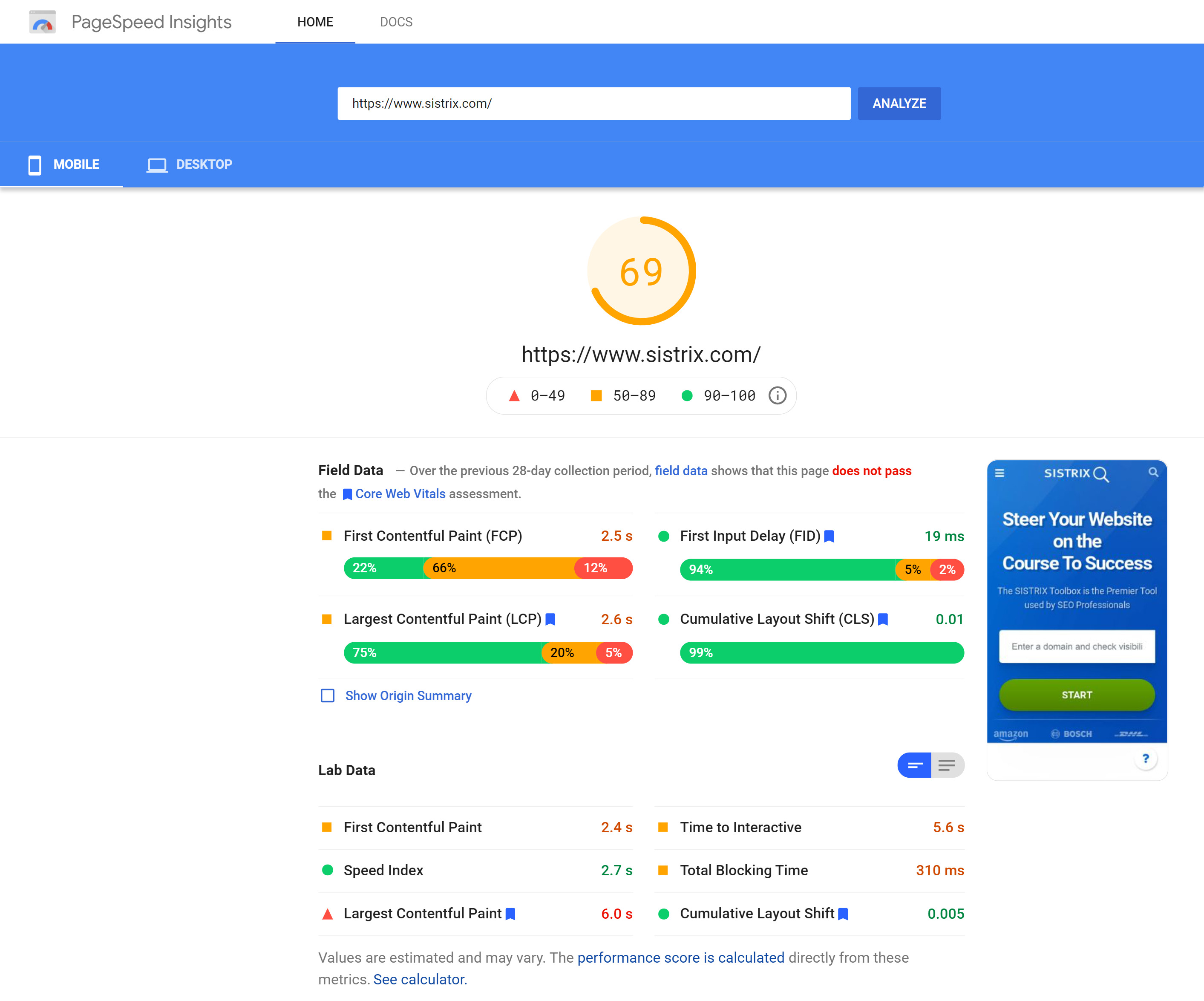
What is Google PageSpeed Insights? - SISTRIX
Alt text: Screenshot of Google PageSpeed Insights tool displaying Core Web Vitals scores for LCP, FID, and CLS optimization on service business websites
How to Improve Largest Contentful Paint (LCP) for Service Business Websites
Improving Largest Contentful Paint (LCP) on service business websites involves speeding up the loading of key elements, which is crucial for retaining impatient visitors searching for immediate help.
Common culprits for poor LCP include slow server responses, large images, and render-blocking resources. Start by choosing a reliable hosting provider with fast Time to First Byte (TTFB)—aim for under 200ms. For service sites with high-res images of work portfolios, compress them using tools like TinyPNG or convert to WebP format, reducing file sizes by 30-50% without quality loss.
Implement lazy loading for below-the-fold images and prioritize critical CSS. For example, inline essential styles for hero sections on your homepage. Use Content Delivery Networks (CDNs) to serve assets closer to users, especially if your service area spans multiple regions. In one case, a law firm reduced LCP from 4.2s to 1.8s by optimizing images, resulting in a 28% conversion uplift.
Advanced tips: Preload key resources like fonts and use server-side rendering for dynamic content. Monitor with Lighthouse audits to catch issues early. For more on image optimization, see our post Image Optimization Techniques for Faster Service Sites.

Performance Optimization Techniques For Website Improvement ...
Alt text: Funnel diagram of website performance optimization techniques for improving LCP on service business websites
Strategies to Reduce First Input Delay (FID) and Transition to INP on Service Sites
Reducing First Input Delay (FID) for better interactivity on service business websites ensures users can engage quickly, like filling out quote forms without frustration.
FID issues often stem from heavy JavaScript execution blocking the main thread. Minimize this by deferring non-essential scripts and using async loading. Break up long tasks with code splitting—tools like Webpack can help. Limit third-party scripts, such as analytics or chat widgets common on service sites, by loading them only when needed.
As Google shifted to INP in 2024, focus on overall session responsiveness. Optimize for taps, clicks, and key presses throughout the page lifecycle. For instance, a healthcare provider improved INP by 45% through JavaScript minification, leading to a 35% increase in form submissions. Use browser dev tools to identify long tasks exceeding 50ms.
Pro tip: Implement web workers for background tasks and reduce DOM size. This is vital for service pages with interactive elements like calendars or calculators. Link to our related content: JavaScript Best Practices for Interactive Service Websites.
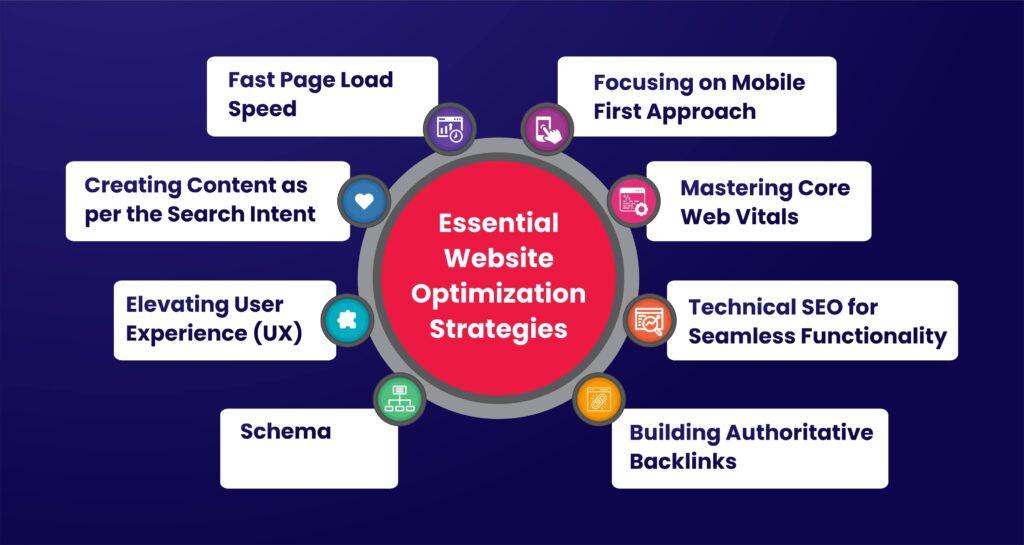
A Step-by-Step Guide To Website Optimization Strategies
Alt text: Mind map of essential website optimization strategies including FID reduction for service business sites
Tips for Minimizing Cumulative Layout Shift (CLS) in Service Business Web Design
Minimizing Cumulative Layout Shift (CLS) to enhance visual stability on service business websites prevents annoying jumps that can cause users to misclick or leave.
CLS is triggered by unsized media, dynamic ads, or font loading. Always specify width and height attributes for images and videos—use aspect-ratio CSS for responsiveness. Reserve space for embeds like Google Maps or testimonials sliders, common in service portfolios.
Avoid injecting content above existing elements; use placeholders for ads or late-loading components. Optimize web fonts by preloading or using font-display: swap to prevent invisible text. A local service business fixed CLS from 0.25 to 0.05 by sizing images properly, dropping bounce rates by 20%.
For WordPress-based service sites, choose themes with built-in CLS optimizations. Test with PageSpeed Insights and fix issues iteratively. Explore our guide on Responsive Design for Service Business Websites.
Conclusion: Elevate Your Service Business with Optimized Core Web Vitals
Optimizing Core Web Vitals for your service business website isn't just about pleasing Google—it's about delivering a superior user experience that converts visitors into clients. By focusing on LCP, FID/INP, and CLS, you can achieve better rankings, lower bounce rates, and higher conversions. Start with an audit today and implement these strategies step by step.
For authoritative resources, visit Google's Web Vitals Guide and developers.google.com on Core Web Vitals. Also, check Webkul's CLS and LCP Tips.
Call-to-Action: Ready to optimize your site? Schedule a free strategy session with ZavaBuild today to audit your Core Web Vitals and unlock growth. Book Now
FAQ
Here are some frequently asked questions about Core Web Vitals optimization:
What are the thresholds for good Core Web Vitals scores?
Good scores are LCP under 2.5 seconds, FID under 100ms (or INP under 200ms), and CLS under 0.1.
How do Core Web Vitals impact SEO for service businesses?
They contribute to page experience signals in Google's rankings, helping service sites appear higher in local searches and reducing bounce rates.
Can I optimize Core Web Vitals without coding knowledge?
Yes, using plugins like WP Rocket for WordPress or tools like PageSpeed Insights for guided fixes.
What's the difference between FID and INP?
FID measures the first interaction delay, while INP assesses overall responsiveness. Google replaced FID with INP in 2024.
How often should I check my site's Core Web Vitals?
Monthly, or after major updates, using Search Console.

About the Author
Christopher Bell, Co-founder & CEO, Zava Build
Middlesbrough-based growth specialist helping UK service businesses generate consistent, qualified leads through integrated digital systems.
With over 5 years of experience, Christopher combines high-conversion web design, intent-driven SEO, and expert Google Business Profile optimisation to build scalable foundations that deliver real enquiries, not just traffic.